
Table of Contents
A flood can disrupt a commercial property within minutes. Heavy rain, stormwater, plumbing failures, and overflowing drains can affect entrances, offices, storage rooms, production areas, and shared facilities. For business owners looking for commercial flood cleanup in Massachusetts, the first goal is to protect people and prevent a difficult situation from becoming more extensive.
Enterprise Cleaning Corporation provides emergency cleanup and flood response for commercial facilities in Worcester and Central Massachusetts. Its website describes water extraction, structural drying, urgent cleanup, and coordination with insurance companies. Because each incident is different, the appropriate response depends on where the water came from, how far it spread, and which materials or building systems were affected.
This article outlines immediate actions, what a professional cleanup may involve, and practical ways to prepare for the return to normal operations.
First Priority: Keep People Safe
Do not assume floodwater is safe because it looks clear. Water may contain sewage, chemicals, debris, or other contaminants. Electrical equipment, outlets, and powered machinery can also create serious hazards when wet. Keep employees and visitors out of flooded areas until the risks have been assessed and the space is confirmed safe.
If possible, stop the source only when it is safe to do so. Contact the appropriate utility, plumber, building engineer, or emergency service if the incident involves electrical systems, structural damage, gas, or a continuing water supply. Do not use standard electrical appliances to remove standing water.
Tell the cleanup provider whether the water may be from a drain backup, stormwater, or a known clean-water supply. That information can affect the required protective measures and cleanup method. If the property contains sensitive stock, records, medical materials, or production equipment, explain those concerns during the initial call.
How Commercial Flood Cleanup Works
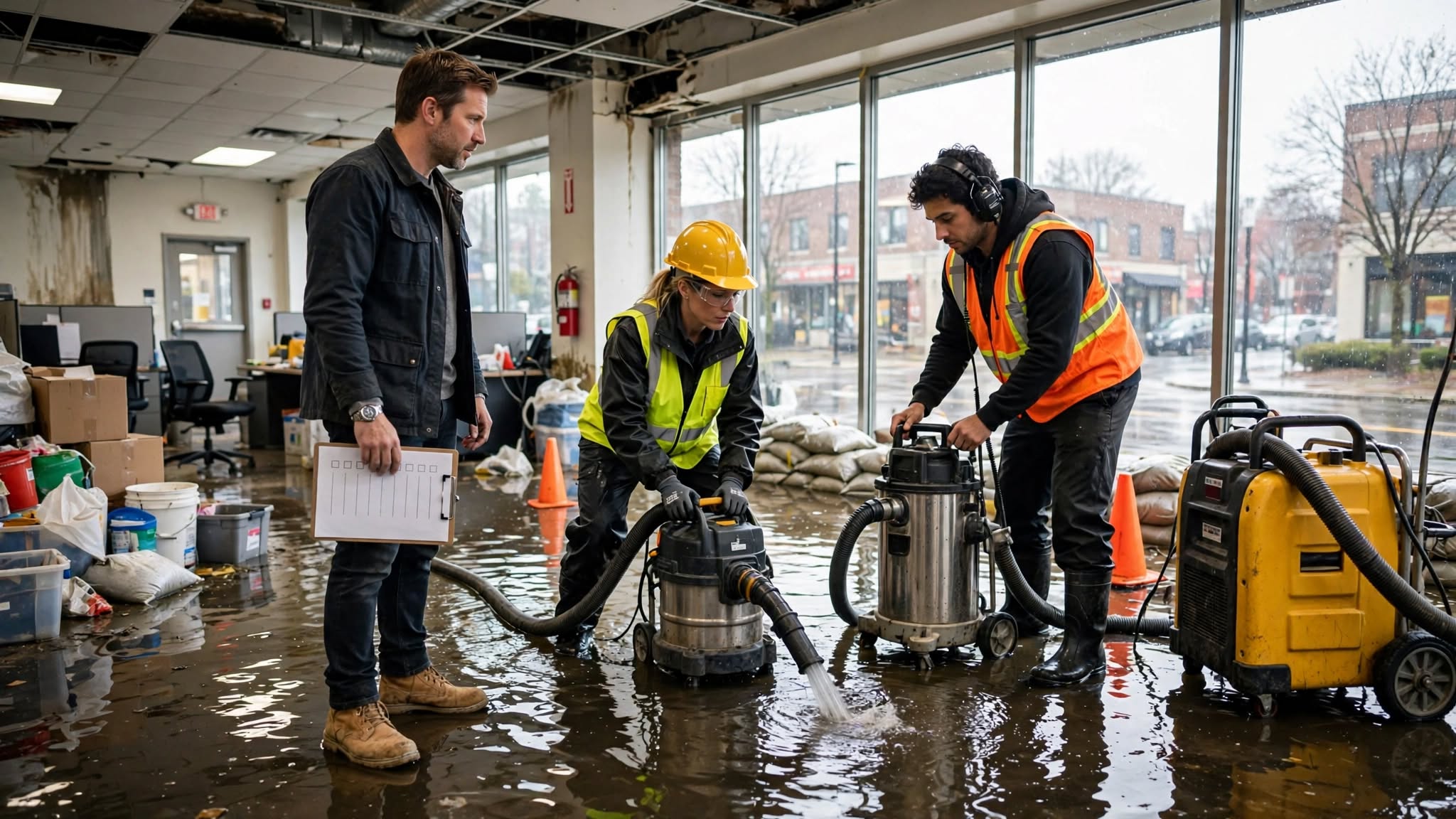
A well-organized response begins with understanding the affected area and identifying immediate risks. Depending on the incident, the work may include documenting visible damage, extracting standing water, removing debris, moving items where safe, and setting up equipment to support drying. A provider may also identify materials that need further inspection or removal.
Floodwater can affect more than the surface of a floor. Moisture may travel beneath carpet, into wall cavities, behind baseboards, and into stored materials. Drying and monitoring decisions should take the construction and the source of water into account. Where contamination is suspected, cleaning and disinfection must be appropriate to the situation; ordinary janitorial work alone may not be sufficient.
Enterprise Cleaning Corporation's emergency restoration page describes its water and flood response in Central Massachusetts. Confirm the exact scope and current availability for your facility when you call.
Documenting the Incident and Working With Insurance
Photographs and clear notes can help property managers, insurers, and contractors understand what happened. If safe, capture the water's location, visible damage, affected equipment, and any obvious source. Record when the incident was discovered and what actions have already been taken. Keep copies of calls, emails, estimates, invoices, and work summaries.
Notify the building owner or property manager and contact your insurance company according to your policy. Ask which forms, photographs, estimates, or inspections are required. Avoid discarding damaged property before the insurer advises whether it needs to be inspected, except where immediate safety or sanitation needs require action.
Enterprise Cleaning Corporation states that it coordinates with insurance companies and can provide photo documentation and itemized reporting. Ask the company and your insurer how this process will work for your specific claim. Insurance coverage and approval are determined by the policy and carrier, so do not assume that every service or repair will be covered.
Planning Business Continuity and Reopening
Flood cleanup often happens alongside decisions about staffing, deliveries, customer access, and tenant communication. Identify areas that must remain closed and communicate those restrictions clearly. If only part of the facility is affected, establish safe routes that keep people away from wet or potentially contaminated spaces. Do not reopen an area simply because visible water has disappeared; hidden moisture, electrical issues, and damage to materials may still need attention.
Work with the property owner and relevant professionals to decide when repairs, inspections, or additional remediation are complete. A restoration provider can explain what cleanup tasks have been performed, while qualified electricians, plumbers, building specialists, or other contractors may need to address separate systems.
Once the immediate issue is resolved, review whether the building needs additional deep cleaning or floor care. The right service depends on the floor material and the nature of the incident. Do not use a routine cleaning service in place of specialist work where sewage, hazardous substances, or extensive concealed moisture is involved.
Preparing for Future Floods
A basic emergency plan can help reduce confusion when water enters the building again. Keep key contact numbers accessible, identify the person responsible for calling emergency providers, and make sure staff know how to report leaks. Review the location of shutoff valves with qualified building personnel and keep important records backed up or stored away from vulnerable areas.
Property managers should also inspect roof drainage, exterior grading, sump systems, plumbing, and other potential sources of water intrusion with the appropriate professionals. Businesses that store products or documents near floor level may want to review how those items can be protected during an incident.
For ongoing facility needs, Enterprise Cleaning Corporation offers office cleaning and janitorial services. A routine cleaning plan cannot prevent every flood, but clear facility procedures and a defined emergency contact can make it easier to respond quickly.
Request Commercial Flood Cleanup
If your business has experienced flooding, provide the response team with the address, water source if known, the rooms affected, and any safety concerns. Ask whether the team can attend your location, how the emergency dispatch process works, what initial work is proposed, and what authorizations are needed before dispatch.
Enterprise Cleaning Corporation lists 24/7 emergency response and serves Worcester and Central Massachusetts, with broader service across Massachusetts, Rhode Island, and Southern New Hampshire. Call 508-890-1000 or use the emergency callback form. For other commercial facility services, the commercial cleaning quote form is available online.
Quick communication, safe access, and clear documentation help establish the next steps after a flood. Always prioritize safety and confirm current response availability directly with the provider.