
Table of Contents
- •Why school floors need more than daily mopping
- •The seasonal challenge: salt, grit and moisture
- •Five areas to include in a school floor-care plan
- -Entrances and vestibules
- -Main corridors and stair landings
- -Classrooms and administrative offices
- -Cafeterias and multipurpose rooms
- -Gyms and shared activity areas
- •Use school breaks strategically
- •Recognise when your floor-care plan needs a review
- •What to ask before hiring a floor-care provider
- •Make the maintenance calendar visible
- •Commercial floor care for schools in Worcester County
- •Questions to settle before scheduling work
- •Coordinate floor care with school operations
- •Arrange a facility walkthrough
Why school floors need more than daily mopping
School floors take a beating. Students move between classrooms, corridors fill at the end of each lesson, cafeterias handle food and drink, and entrances collect whatever the weather brings indoors. In Worcester County, Massachusetts, winter salt and grit can make the problem especially visible. A floor may be swept and mopped regularly yet still look dull, scuffed or worn because daily cleaning and planned floor maintenance do different jobs.
At Enterprise Cleaning Corporation, we help facilities plan commercial floor care around the building's surfaces, traffic levels and calendar. The aim is not simply to make floors shine for a day. It is to maintain a presentable environment, manage accumulated soil and schedule more involved work when it is least disruptive to students, staff and visitors.
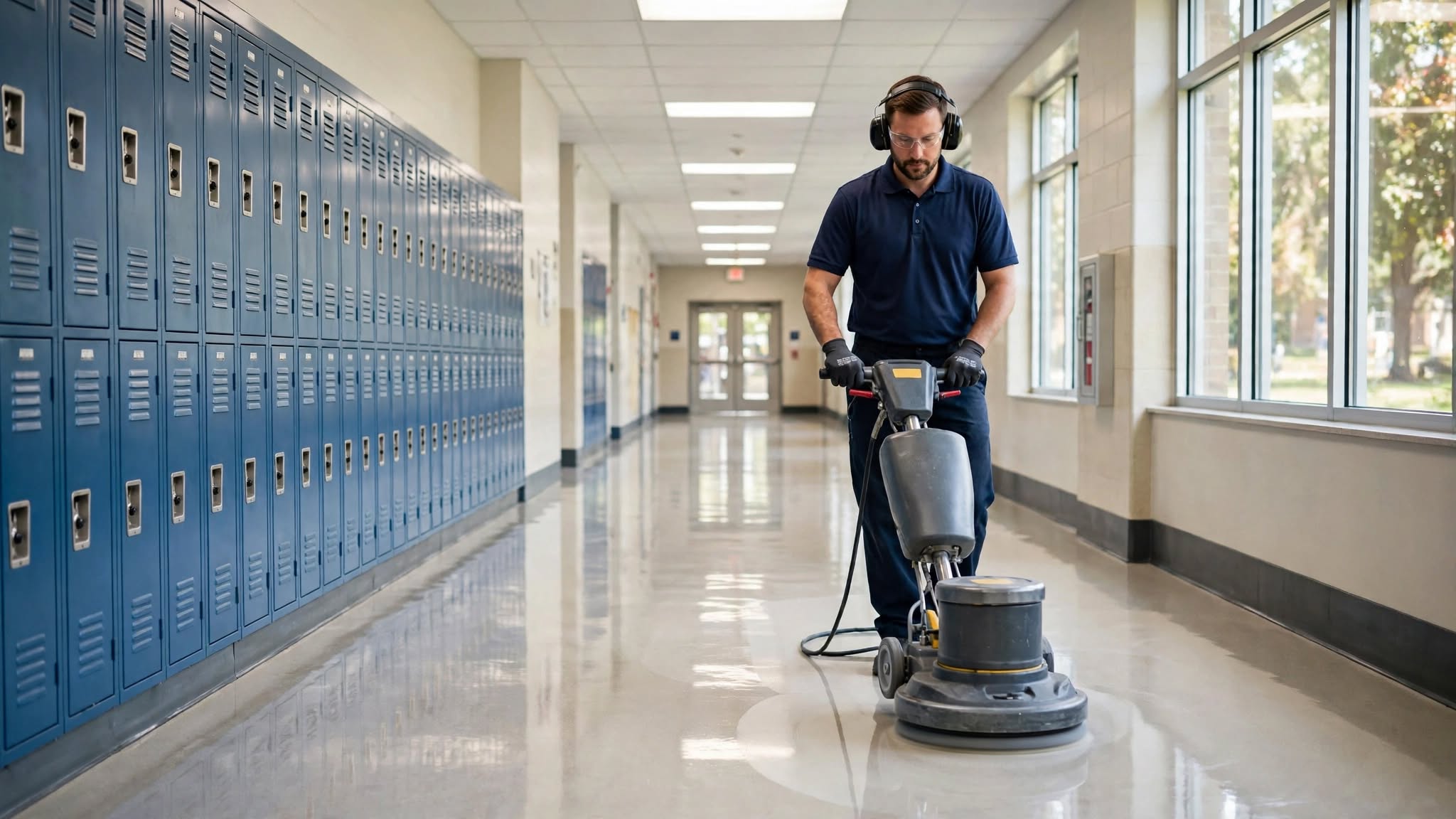
Daily cleaning removes loose dirt and ordinary spills, but it cannot always address embedded soil, worn finishes or marks built up over time. Depending on the surface, periodic maintenance may include machine scrubbing, buffing, stripping and refinishing, or carpet cleaning. Each method has a different purpose, and the correct choice depends on the floor material and its current condition.
The seasonal challenge: salt, grit and moisture
During winter, outdoor residue is carried into vestibules and corridors on shoes, boots and wheeled equipment. Grit can contribute to surface wear under repeated foot traffic, while moisture makes entrance areas harder to manage. A practical plan gives entrances and transition areas extra attention during wet or snowy periods. Mats, frequent soil removal and suitable floor cleaning can all play a part, depending on the building's setup.
Seasonal planning should also consider where dirt travels after entering the building. If the first corridor or stair landing collects residue, cleaning those routes more consistently can help keep material from spreading into classrooms and offices.
Facilities teams can use observations from custodians and staff to identify the spots that need more attention.
Five areas to include in a school floor-care plan
Entrances and vestibules
Entrances are the first place visitors see and one of the busiest points in the building. Plan for extra attention during wet weather, arrival and dismissal. Check mats, edges and thresholds, and make sure the chosen cleaning method suits the floor material.
Main corridors and stair landings
Corridors experience repeated traffic throughout the day. Dirt often gathers along edges, near doorways and around corners where quick cleaning can miss it. A regular routine supported by periodic machine care can help maintain these routes.
Classrooms and administrative offices
Classrooms need cleaning that fits furniture layouts, chair movement and how the rooms are used. Administrative areas may have different flooring and quieter traffic patterns. Separating these needs makes it easier to set appropriate frequencies without applying unnecessary work to every room.
Cafeterias and multipurpose rooms
Food residue, drinks and quick room turnarounds create a different challenge in cafeterias and multipurpose spaces. The schedule should account for meal periods, events and the time required for a floor to be safely ready for use again.
Gyms and shared activity areas
Large activity spaces can require surface-specific care and careful coordination with the school calendar. Before arranging treatment, identify the flooring type and any instructions supplied by the facility or floor manufacturer. Do not assume a method suitable for a corridor is suitable for an activity surface.
Use school breaks strategically
Summer, winter and other school breaks can create opportunities for work that would be disruptive during a normal teaching day. A planned project can focus on corridors, classrooms, cafeteria floors or other areas where deeper maintenance is needed. The scope should identify which rooms will be treated, how access will be managed and how much time is needed before spaces can be used again.
Planning early also helps avoid clashes with summer programmes, staff training, exams, maintenance contractors and room setup. If a building has multiple wings or floors, the work can be organised in stages so the facilities team can coordinate keys, furniture movement and reopening checks.
Recognise when your floor-care plan needs a review
Visible dullness, repeated scuff marks, soil returning soon after cleaning and complaints about high-traffic areas are useful signals. They do not automatically mean the floor needs stripping or refinishing; the appropriate treatment depends on the surface and its condition. An assessment helps distinguish routine soil from wear or finish issues and avoids using a more aggressive method than necessary.
Keep a basic record of each area, surface type, service dates, work performed and follow-up recommendations. This information helps schools plan budgets, compare conditions over time and schedule work before busy periods. It can also explain why some spaces need more frequent care than others.
What to ask before hiring a floor-care provider
Ask how the provider will identify floor materials, choose the appropriate process and stage the work. Discuss access, drying or curing time where relevant, furniture movement, safety precautions and the order in which rooms will be returned to use.
Share the school calendar and site-specific requirements before the schedule is confirmed.
It is also worth discussing how floor care connects with the school's regular janitorial programme. When the routine cleaning team understands what was done during a periodic project, they can follow maintenance recommendations and report changes in the floor's condition. That continuity can make the overall plan easier to manage.
Make the maintenance calendar visible
A shared calendar helps administrators, custodial staff and contractors understand which tasks are planned during each break. It should identify the spaces involved, the expected sequence and the contact responsible for access. If the school has summer activities or contractor work scheduled, include those dates before floor-care dates are finalised.
After a project, record recommendations for routine care, including areas that may need closer observation during the next term. Notes about entrance soil, corridor traffic or a particular finish can help the facilities team prepare before seasonal conditions return.
Commercial floor care for schools in Worcester County
We provide commercial floor care as part of our wider facility cleaning services. Our team can review the school's flooring, discuss seasonal problem areas and recommend a practical maintenance schedule. Where needed, floor care can be coordinated with recurring janitorial service and our commercial floor care programme.
At Enterprise Cleaning Corporation, we know school facilities have to be ready for students and staff, not just for a cleaning visit. We work with facility representatives to plan around occupancy, events and access, so the scope is clear before work begins.
Questions to settle before scheduling work
Confirm the floor types, rooms involved, school calendar, access arrangements and who will move furniture if needed. Ask what preparation is required and how long areas should remain out of use. These details make it easier to coordinate floor care with school operations and reduce last-minute changes.
Coordinate floor care with school operations
A floor-care project needs more than a date on the calendar. The facilities team should confirm room access, furniture arrangements, contractor schedules, alarm procedures and the time needed before spaces return to use. For a school with several wings, working in stages may help staff keep track of completed areas and avoid reopening a room before the agreed process is complete.
It is useful to keep the maintenance record with the building's regular facilities documents. Note the surfaces treated, work completed and any recommendations for routine care. This record gives the next review a starting point and helps administrators plan around recurring seasonal issues.
Arrange a facility walkthrough
Need commercial floor care for a school in Worcester County? We can assess the flooring, review the school calendar and discuss a practical maintenance plan. Call Enterprise Cleaning Corporation on (508) 890-1000 or arrange a walkthrough through our contact form.