
Commercial Surface Dusting: Why Massachusetts Businesses Need Professional Dusting Services
Why Massachusetts businesses need professional commercial surface dusting and high dusting services. Improve indoor air quality, control workplace allergens, and project meticulous cleanliness.
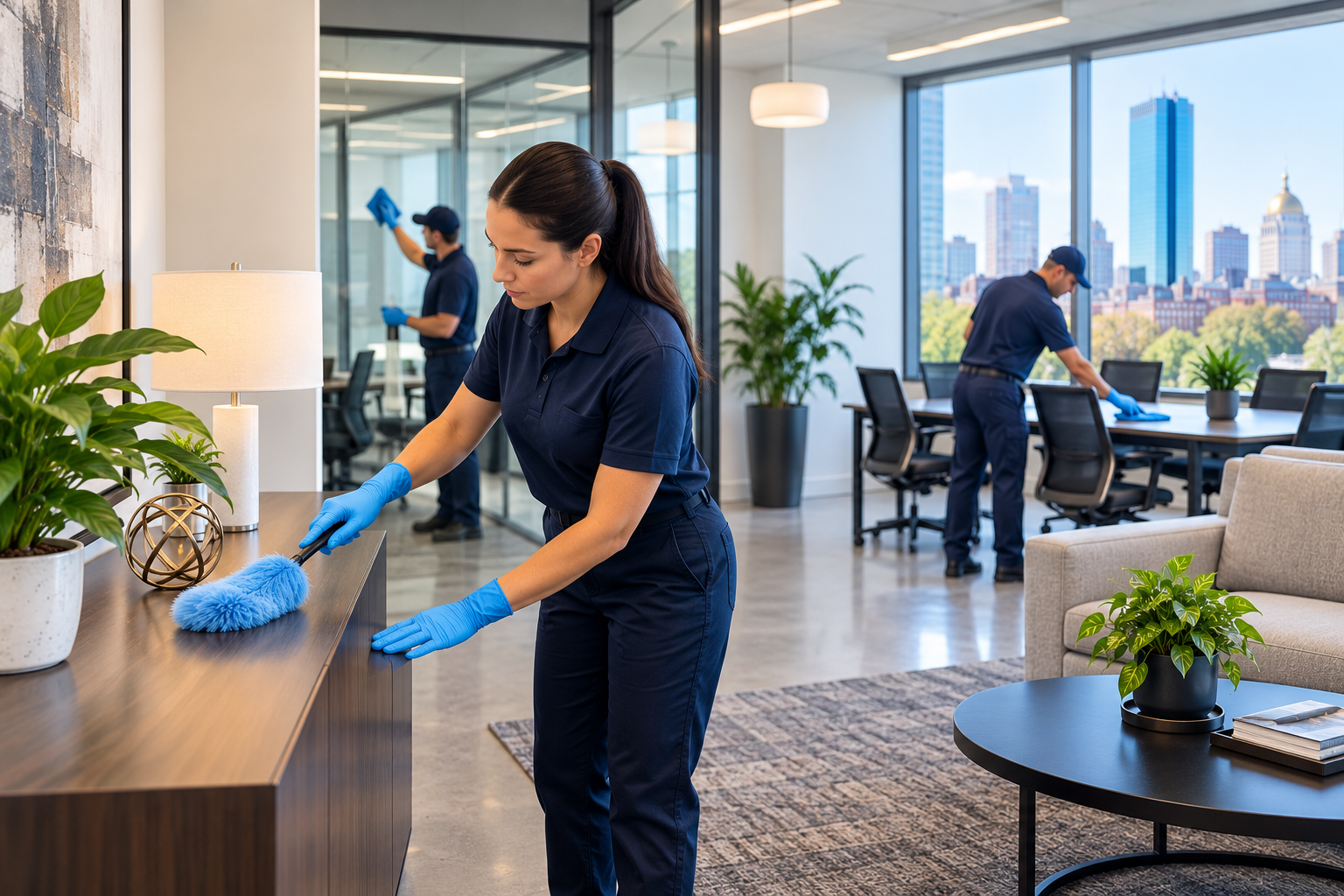
Table of Contents
- •What Is Commercial Surface Dusting?
- •Why Is Surface Dusting So Important in the Workplace?
- -1. Surface Dusting Supports Better Indoor Air Quality
- -2. A Dust-Free Workplace Creates a Better First Impression
- -3. Surface Dusting Helps Reduce Allergens and Irritants
- •How Often Should a Commercial Cleaning Company Dust?
- •Seasonal Commercial Dusting in Massachusetts
- -Winter: Heating Season & Closed Buildings
- -Spring: Heavy Pollen Mitigation
- -Summer: Consistent Dust Control
- -Fall: Transition to Winter Preparation
- •Which Industries Need Surface Dusting Most Frequently?
- •Low Dusting vs. High Dusting
- •Why Microfiber and Proper Dusting Methods Matter
- •Don't Forget Post-Construction and Renovation Dust
- •Professional Commercial Cleaning in Central Massachusetts
- -There Is Clean — and There Is ENTERPRISE Clean
When most people think about commercial cleaning services, they immediately think about vacuuming carpets, mopping floors, cleaning restrooms, emptying trash, and disinfecting high-touch surfaces. However, one of the most important—and frequently overlooked—parts of maintaining a clean, healthy workplace is professional surface dusting.
Dust may seem harmless, but allowing it to accumulate throughout an office, warehouse, medical facility, manufacturing plant, or school negatively affects the appearance and overall hygiene of the facility. Dust contains or collects pollen, outdoor soil, fibers, skin particles, mold spores, and other airborne contaminants.
For businesses throughout Worcester, Central Massachusetts, MetroWest, Greater Boston, and communities across Massachusetts, professional surface dusting should be an integral component of a comprehensive commercial cleaning program.
At Enterprise Cleaning Corporation, we believe there is a major difference between making a building look clean and keeping it professionally maintained. Consistent surface dusting, detailed cleaning, floor care, restroom sanitation, high-touch disinfecting, and proper janitorial maintenance work together to create a truly clean workplace.
What Is Commercial Surface Dusting?
Commercial surface dusting is the systematic removal of accumulated particulate matter and debris from horizontal and vertical surfaces throughout a facility. A professional cleaning company addresses much more than obvious desks.
Depending on the building's specifications, commercial dusting includes:
Desks, computer tables, and workstations
Filing cabinets and storage credenzas
Conference room tables and executive furniture
Window sills, blinds, and window frames
Partition tops and cubicle walls
Shelving and bookcases
Picture frames, plaques, and wall art
Door frames, door tops, and moldings
Baseboards and architectural ledges
Stair railings, banisters, and balusters
Accessible HVAC supply vents and return grilles
Tops of tall cabinets and refrigerators
Common-area furniture and display cases
Interior signage and informational directories
Light fixtures and pendant lighting where safely accessible
An effective janitorial program establishes which surfaces are cleaned during every visit and which areas are placed on a scheduled rotating detail-cleaning schedule. This prevents the common pitfall where floors and trash look clean, but dust continues piling up on elevated surfaces.
Why Is Surface Dusting So Important in the Workplace?
Dust doesn't simply disappear. Outdoor soil enters through open doors, windows, ventilation, and footwear. Other particles originate inside through human shedding, paper sorting, equipment friction, cardboard fibers, and manufacturing operations.
The U.S. Environmental Protection Agency (EPA) explains that indoor dust contains outdoor soil as well as biological matter including pollen, mold spores, pet dander, dust mites, and skin flakes. The EPA recommends frequent cleaning and notes that damp dusting helps prevent settled dust from being redistributed into the breathing zone.
1. Surface Dusting Supports Better Indoor Air Quality
Dust sitting on a filing cabinet or window sill does not stay there permanently. Walking, closing doors, operating fans, and heating cycles disturb settled dust and launch particles back into the air. Rather than dry-dusting with feather dusters that merely scatter particles, a professional janitorial team utilizes microfiber cloths and damp-dusting techniques to trap particulate matter at the source.
2. A Dust-Free Workplace Creates a Better First Impression
Imagine walking into a company's reception area and seeing dust covering the counter, window sills, and wall frames. Even if the carpet was vacuumed, the space feels neglected. Clean surfaces communicate attention to detail—a critical factor for corporate offices, law firms, financial institutions, and automotive dealerships.
3. Surface Dusting Helps Reduce Allergens and Irritants
During Massachusetts spring and fall allergy seasons, tree and ragweed pollen infiltrate commercial buildings. Removing settled dust prevents allergen reservoirs from accumulating and aggravating employees or visitors with respiratory sensitivities.
How Often Should a Commercial Cleaning Company Dust?
For a typical professional office, accessible horizontal surfaces should be inspected and dusted multiple times per week. High-visibility reception counters, conference rooms, and waiting areas require attention on every scheduled visit.
Less accessible areas—such as cabinet tops, door frames, high ledges, and ceiling vents—are scheduled on a rotating high-dusting cycle (monthly or quarterly).
Seasonal Commercial Dusting in Massachusetts
Winter: Heating Season & Closed Buildings
During Massachusetts winters, commercial facilities are closed tightly, and forced-hot-air heating runs continuously. Dust primary surfaces 2 to 5 times per week, with frequent attention to return air grilles and entrance vestibules.
Spring: Heavy Pollen Mitigation
Spring introduces massive amounts of pollen and outdoor dust into facilities. High-visibility surfaces require 3 to 5 cleanings per week. Combine surface dusting with carpet cleaning, floor care, and detailed window sill washing.
Summer: Consistent Dust Control
With air conditioning running continuously, exterior doors opening frequently, and road construction nearby, maintain dusting 2 to 5 times per week. Warehouses and production facilities with open loading docks require specialized attention.
Fall: Transition to Winter Preparation
Fall is the ideal time for a thorough facility-wide detail dusting before winter arrives, addressing high ledges, window frames, partitions, baseboards, and accessible vents.
Which Industries Need Surface Dusting Most Frequently?
Medical and Healthcare Facilities: Dust on clinical counters, waiting room tables, or medical charting stations violates the clean standard patients expect. Healthcare environments often require daily dusting 5+ days per week.
Schools & Educational Campuses: High student traffic necessitates consistent classroom, library, and administrative dusting to protect young occupants from allergen buildup.
Manufacturing Facilities: Industrial processes generate specialized dusts. Where hazardous particulates like respirable crystalline silica are present, OSHA strictly regulates cleaning methods (prohibiting dry brushing).
Warehouses & Logistics Hubs: High racking, pallets, and forklift traffic generate heavy dust layers that require routine surface wiping and scheduled aerial high-dusting.
Automobile Dealerships: Bright showroom lighting makes dust on desks, window sills, and display vehicles immediately glaring to prospective buyers.
Corporate & Financial Offices: Spotless conference tables and executive desks project prestige and meticulous professionalism.
Low Dusting vs. High Dusting
Cleaning only at eye level leaves a major gap. High-dusting focuses on areas above 6 feet, including:
Door frame headers | High storage racks | Overhead piping | Exposed ductwork | Structural steel beams | Pendant lighting fixtures | High partition tops | Ceiling return air vents
Enterprise Cleaning Corporation structures cleaning contracts with clear low-dusting daily routines alongside scheduled monthly or quarterly high-dusting rotations.
Why Microfiber and Proper Dusting Methods Matter
There is an enormous difference between removing dust and moving dust. Dry feather dusters flick dust into the air, where it settles right back down hours later. Commercial microfiber cloths utilize microscopic split fibers that create an electrostatic charge, trapping dust particles until washed. For sensitive environments, HEPA-filtered vacuum attachments capture airborne particulates directly.
Don't Forget Post-Construction and Renovation Dust
Any business completing remodeling, drywall installation, flooring replacement, or tenant fit-outs needs professional post-construction cleaning. Fine drywall and silica dust coat every horizontal and vertical surface. Our specialized post-construction crews work systematically from high ceilings downward to deliver a move-in-ready facility.
Professional Commercial Cleaning in Central Massachusetts
Enterprise Cleaning Corporation delivers complete commercial janitorial services tailored to facility demands across Worcester County, Central Massachusetts, and MetroWest.
Our service territory covers Worcester, Shrewsbury, West Boylston, Framingham, Leominster, Fitchburg, Lowell, Waltham, and surrounding communities.
There Is Clean — and There Is ENTERPRISE Clean
If dust is visible across your desks, ledges, partitions, or window sills, your facility maintenance needs attention. Let Enterprise Cleaning Corporation develop a proactive dusting and commercial cleaning program tailored to your facility.
Contact our team today to request a comprehensive commercial cleaning assessment.
Request a Commercial Cleaning Quote Contact Our Team
It’s not clean… until it’s ENTERPRISE Clean.