Table of Contents
New England storms can bring heavy rain, wind-driven water, roof leaks, overflowing drains, and flooding around commercial buildings. Even a small intrusion can damage flooring, stored materials, office furniture, and wall finishes. For property owners searching for water restoration near MA, a timely and organized response can help protect people, reduce disruption, and clarify what needs to happen next.
Enterprise Cleaning Corporation provides emergency cleanup services for commercial facilities in Worcester and Central Massachusetts, with broader service across Massachusetts, Rhode Island, and Southern New Hampshire. Its listed capabilities include water extraction, structural drying, urgent cleanup, and coordination with insurance companies. The precise scope depends on the source of the water and the condition of the building.
This article covers what to do after storm-related water damage, how commercial cleanup may work, and how businesses can prepare for future severe weather.
Recognizing Storm-Related Water Damage
Storm damage is not always obvious at first. Water may enter through a roof opening, damaged flashing, window seals, exterior doors, foundation cracks, or overwhelmed drainage systems. You may notice ceiling stains, damp carpet, peeling paint, musty odors, standing water, or wet stock. These signs should be taken seriously, especially when moisture may be concealed behind finishes.
Do not climb onto a wet or damaged roof to investigate. Keep people away from areas with sagging ceilings, unstable materials, electrical hazards, or contaminated water. If the building may be structurally unsafe, follow emergency procedures and contact the appropriate professionals.
Once the area is safe, identify the likely entry point and whether water is still coming in. Share those details with the building manager and restoration provider. A cleanup team can address the water impact, while a qualified roofing contractor, plumber, or building professional may be needed to repair the source.
Immediate Steps for Commercial Properties
Begin with safety and communication. Keep employees and visitors out of affected spaces, particularly where water has reached electrical equipment or where the ceiling or floor may be damaged. If it can be done safely, move unaffected items away from the wet area. Avoid moving heavy equipment or walking through water when the source is unknown.
Take photographs of visible damage if safe, and record when the issue was discovered. Notify the property owner, facilities team, and insurer as appropriate. If multiple tenants occupy the building, communicate which areas are closed and where people should avoid entering.
Do not assume that removing visible water completes the job. Moisture can remain under flooring and inside walls. Enterprise Cleaning Corporation’s emergency restoration page describes emergency water and flood cleanup services in Central Massachusetts. Call to explain the situation and confirm current response availability. You can also read how emergency cleaning dispatch works in Worcester and Central MA.
What the Cleanup Process May Involve
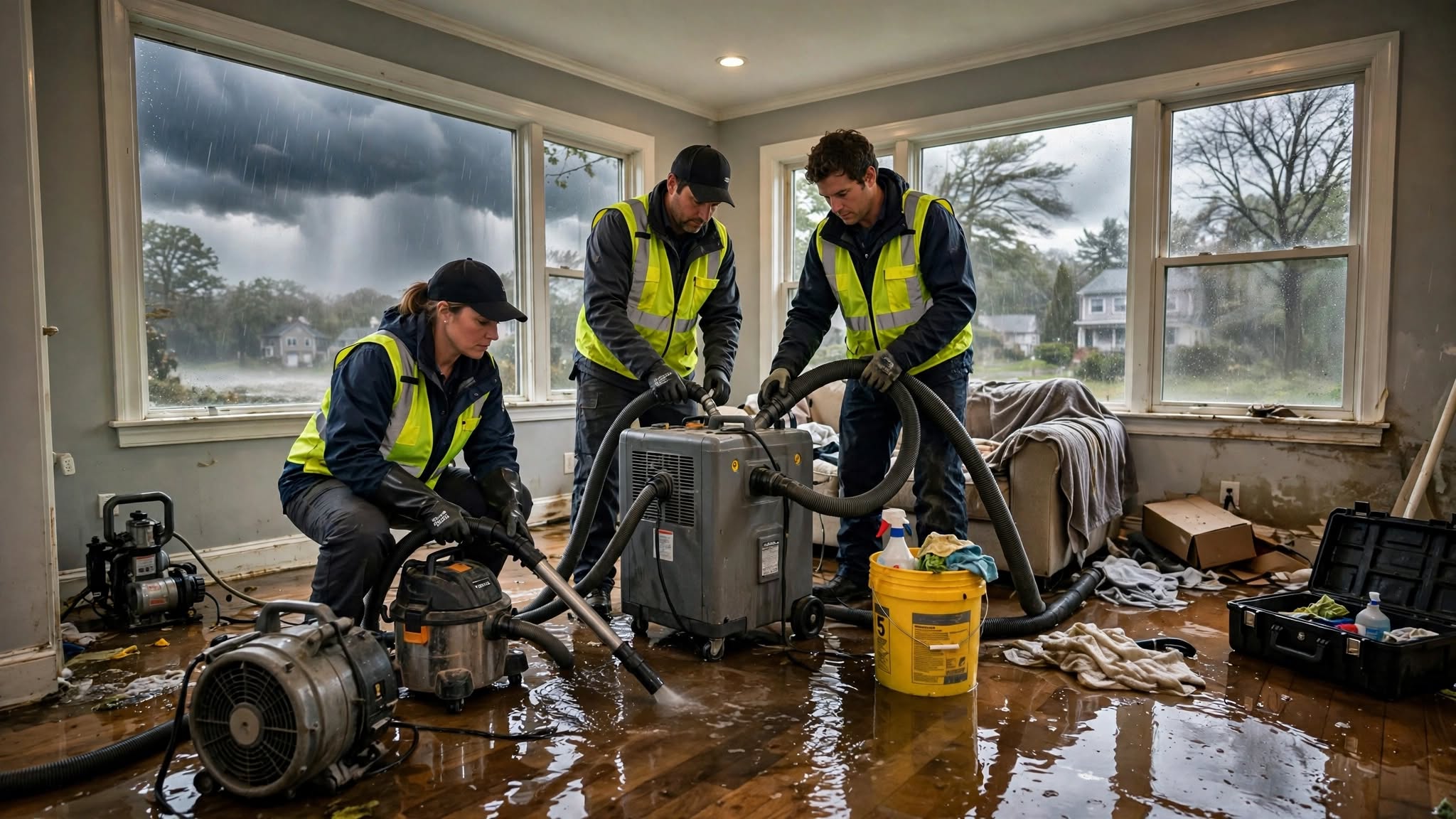
Commercial water cleanup often starts with assessing the affected spaces and identifying immediate risks. Depending on the incident, work may include extracting standing water, removing debris, using professional drying equipment, and cleaning affected surfaces. Some materials may need additional inspection or removal if they cannot be safely restored.
Different parts of a property can require different approaches. Carpet, hard flooring, drywall, insulation, furniture, and stored goods respond differently to moisture. The source also matters: rainwater that enters through a roof may differ from water that backs up through a drain. If contamination is suspected, tell the provider before work begins so the appropriate precautions can be considered.
Clinical and healthcare spaces can have additional hygiene expectations after an incident, so those facilities may also want to review medical office cleaning options.
A restoration plan should explain the work proposed and any limitations. Drying times and reopening decisions depend on the building, materials, weather conditions, and extent of the damage. If structural repairs or specialist remediation are needed, those tasks may fall outside routine cleaning.
Insurance, Records, and Coordination
After storm damage, contact your insurance carrier or claims representative and ask about required documentation. Keep a record of the incident, photographs, estimates, invoices, and communications. If the property is leased, notify the landlord or property manager promptly and confirm who is authorized to approve work.
Enterprise Cleaning Corporation states that it coordinates with insurance companies and can provide photo documentation and itemized reporting. Ask what records will be provided and confirm the process for your specific claim. Insurance coverage depends on policy wording, the cause of damage, exclusions, and the insurer’s decision.
A clear division of responsibilities can also help avoid delays. The cleanup provider may remove water and support drying, while roofers, electricians, plumbers, or other contractors address repairs. Keep a shared list of open items and confirm when each affected area has been assessed before reopening it.
Preparing for the Next Storm
A practical storm-preparation routine starts before the weather arrives. Arrange for qualified professionals to inspect roof drainage, gutters, exterior seals, and other building components that may allow water inside. Check that emergency contacts are current and that staff know how to report leaks after hours.
Where practical, keep sensitive documents, electronics, and valuable inventory away from known water entry points. Establish a process for communicating building closures, protecting unaffected areas, and contacting emergency service providers. Multi-tenant buildings should make sure each tenant knows how to report an incident and which spaces to avoid.
After a storm, inspect the building only when conditions are safe. Look for new stains, unusual odors, wet materials, and drainage problems. For ongoing building upkeep, Enterprise Cleaning Corporation provides office cleaning, floor care, and other commercial cleaning services, including custom cleaning programs built around your facility. Routine cleaning supports facility maintenance but does not replace weatherproofing, structural repairs, or specialist restoration.
Contact a Water Restoration Provider Near MA
If stormwater has entered your commercial property, describe the location, affected areas, possible entry point, and any safety concerns when you call for help. Ask the provider to confirm service coverage, dispatch availability, and the initial scope. Keep people away from unsafe areas while waiting for professional guidance.
Enterprise Cleaning Corporation lists 24/7 emergency response for commercial cleanup in Worcester and Central Massachusetts, with regional service across Massachusetts, Rhode Island, and Southern New Hampshire. Call 508-890-1000 or visit the emergency restoration services page. For other facility needs, use the commercial cleaning quote page or explore the company website.
A calm, documented response can help property managers coordinate cleanup and repairs while keeping staff and visitors away from hazards.