
Table of Contents
- •Review the site before work begins
- •Focus on high-use areas
- •Make responsibilities clear
- •Plan for continuity
- •Set the scope before scheduling
- •Prioritize areas by traffic and use
- •Plan around business hours and access
- •Keep responsibilities clear
- •Use the right method for each surface
- •Review the result, then maintain it
- •How the cleaning service fits into your facility plan
- •Questions to resolve before the cleaning visit
- -Which areas are included?
- -When can the work take place?
- -Who supplies consumables?
- -How will changes be communicated?
- •Clinical boundaries must be explicit
- •Talk to Enterprise Cleaning Corporation
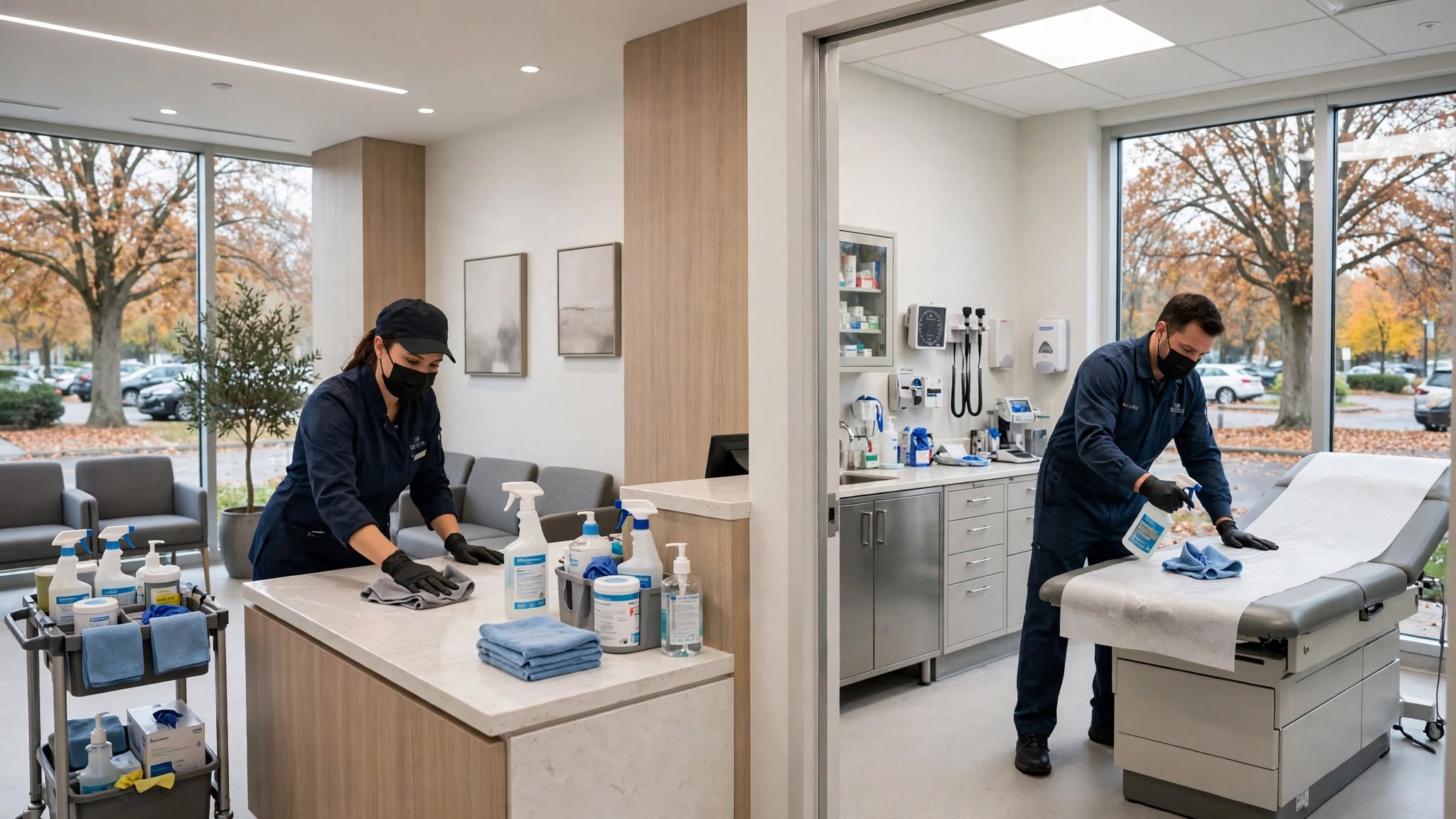
Medical practices and outpatient facilities need cleaning plans that reflect how patients, staff and visitors move through the building. November can bring changing appointment patterns and altered staffing around Thanksgiving. A reliable schedule supports a tidy environment while working within the practice's own infection-prevention policies. Commercial environmental cleaning must be clearly distinguished from clinical sterilization, instrument processing and regulated tasks.
Review the site before work begins
The practice should define which rooms and surfaces are included in environmental cleaning and which tasks remain with clinical staff. A commercial cleaning provider should not be assumed to perform sterilization, instrument processing, clinical waste handling or other regulated procedures. The practice's written protocols must govern those responsibilities.
Focus on high-use areas
Waiting rooms and reception areas need a plan for seating, counters, floors, doors and agreed touchpoints. Consultation and examination rooms may have separate turnover procedures. The practice should specify approved products, contact times, surface restrictions and who is authorized to clean each area.
Make responsibilities clear
Restrooms, staff rooms and administrative spaces also need a clear schedule. Confidential records should be secured, waste should follow the facility's segregation rules and any damaged fittings should be reported through the maintenance process. Do not treat clinical or regulated waste as ordinary office trash.
Plan for continuity
Before Thanksgiving, review appointment schedules, reduced opening hours and planned closures. Confirm room access, who handles turnover between patients and whether a pre-opening check is required when the practice resumes appointments.
Set the scope before scheduling
A cleaning plan should name each room, task, frequency and expected result. Broad instructions such as "clean the building" leave too much room for different interpretations. List reception, restrooms, kitchens, meeting rooms, corridors, floors and waste points separately. State which surfaces are included, whether supplies are provided and which tasks require a separate quote. A written scope makes it easier to plan labor, check completion and discuss changes when the building's use shifts.
Prioritize areas by traffic and use
Not every room needs the same frequency. Entrances, reception areas, restrooms, kitchens and shared meeting rooms often receive repeated use and may need more attention than low-traffic storage or private offices. Consider the number of people using each space, visitor patterns, opening hours and the type of activity taking place. A sensible schedule directs time toward the areas where cleaning has the greatest effect on daily operations.
Plan around business hours and access
Some tasks can be completed while a building is open; others are easier after employees and visitors have left. A phased schedule can allow one floor or zone to be cleaned while another remains in use. Confirm keys, access cards, alarm procedures, restricted rooms, loading arrangements and emergency contacts before the visit. If work requires drying time or temporary barriers, build that into the schedule rather than treating it as an afterthought.
Keep responsibilities clear
The facilities manager, employees, tenants and cleaning provider each have different responsibilities. Employees may need to remove personal food and secure confidential papers. Property teams may need to confirm access, waste arrangements and maintenance contacts. The cleaning provider completes the agreed tasks and reports issues that fall outside the scope. Clear ownership prevents missed work and avoids asking cleaning staff to make decisions about personal property, repairs or specialist equipment.
Use the right method for each surface
A commercial building may contain carpet, carpet tiles, vinyl, resilient flooring, tile, stone, glass, stainless steel and specialist finishes. The same product or method is not suitable for every surface. Follow manufacturer guidance and site instructions, especially where a finish can be damaged by abrasive products, excess moisture or unsuitable chemicals. If the surface or treatment is uncertain, arrange an assessment before work begins.
Review the result, then maintain it
A one-off clean can improve a facility, but the result will not last if routine tasks are insufficient. Use a room-by-room checklist and a practical walk-through to review the agreed work. Record specific issues with the location and task rather than relying on a general impression. If the same area repeatedly needs extra attention, review the frequency, timing or scope. The goal is a sustainable program, not a temporary improvement that disappears within days.
How the cleaning service fits into your facility plan
Enterprise Cleaning Corporation can discuss medical office cleaning services as part of a site-specific program. Where the building needs recurring support, our commercial janitorial services can be considered alongside the agreed project tasks. For workplaces with separate office requirements, see our office cleaning services. Facilities that need additional detail may also wish to review specialty cleaning services or commercial floor care services. The appropriate combination depends on the building, the surfaces, access arrangements and the standard the customer needs to maintain. You can also see how we support medical and healthcare facilities across Central Massachusetts.
Questions to resolve before the cleaning visit
Which areas are included?
List every room and shared area, including any spaces used by visitors or tenants. Identify exclusions and restricted rooms.
When can the work take place?
Confirm operating hours, access arrangements, alarm procedures and any drying time or temporary access restrictions.
Who supplies consumables?
Agree who is responsible for soap, paper products, liners and any site-approved materials that are part of the service.
How will changes be communicated?
Name the site contact and agree how urgent issues, missed tasks and scope changes will be reported.
Clinical boundaries must be explicit
Before service begins, provide the room list, restricted-area instructions, approved product guidance, waste rules and escalation contacts. Confirm which environmental surfaces are included and which procedures remain with clinical staff. Revisit the scope whenever the practice changes its layout, services or patient flow.
Talk to Enterprise Cleaning Corporation
If your facility needs a practical November cleaning plan, speak with Enterprise Cleaning Corporation about medical office cleaning services, commercial janitorial services or office cleaning services. You can also contact our team with your location, building type and preferred schedule.