
Table of Contents
- •Cut to the chase
- •At a glance
- •What a restaurant cleaning company covers and what it does not
- •What Worcester inspectors are looking at
- •A working cleaning frequency schedule
- -Nightly
- -Weekly
- -Monthly
- -Quarterly
- -Per NFPA 96 Table 11.4
- •Hood and duct cleaning under NFPA 96
- •Get a quote
- •Floors, grease, and slip risk
- •Front of house and restrooms
- •Scheduling around service hours
- -1. Fix the access window first
- -2. Settle keys and alarm codes in writing
- -3. Separate nightly from periodic work
- -4. Put the kitchen boundary on paper
- -5. Book the hood service separately and track the date
- -6. Walk the site monthly with the supervisor
- •About Enterprise Cleaning Corporation
- •Ready to talk
Cut to the chase
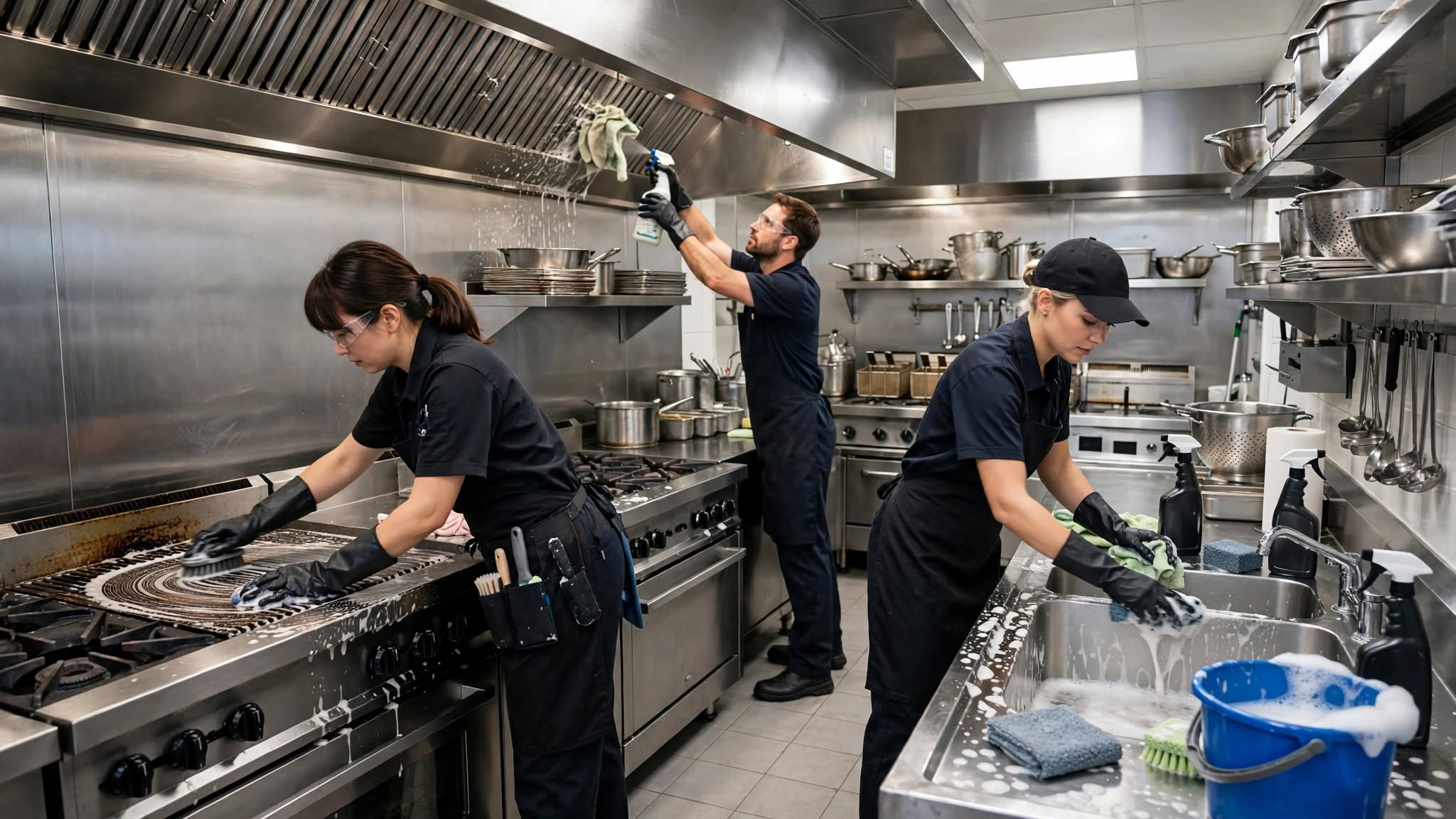
Restaurant cleaning in Worcester usually splits three ways. Kitchen staff handle food contact surfaces nightly. A cleaning contractor handles front of house, restrooms, floors, and back of house degreasing. A separate NFPA 96 certified company cleans the hood, duct, and exhaust fan on a frequency set by how you cook. Knowing which company owns which task is what keeps an inspection clean.
At a glance
Massachusetts food establishments operate under 105 CMR 590, which adopts the FDA Food Code with state amendments.
Worcester's Department of Inspectional Services runs the Food Protection Program out of 25 Meade Street, and inspections are unannounced.
NFPA 96 Table 11.4 sets hood and duct cleaning frequency by cooking type, from monthly for solid fuel and wok operations to annually for low volume.
Hood systems must be cleaned to bare metal, not just wiped down.
Quarry tile grout in a kitchen holds grease. Mopping spreads it. It needs periodic mechanical deep cleaning.
What a restaurant cleaning company covers and what it does not
The most expensive mistake in restaurant cleaning is assuming somebody else is doing a task. Three parties usually share the building and the lines between them are rarely written down.
Kitchen staff handle food contact surfaces, equipment, utensils, and the nightly close-down of the cook line. That is their job under the food code and no outside contractor should be touching it mid-service.
A restaurant cleaning company handles the rest of the building. Dining room, bar, restrooms, entry glass, hard floors front and back, baseboards, trash areas, and periodic back of house degreasing of walls, floors, and the exterior of equipment. This is the work that drags a dining room down slowly and that nobody on a tired closing shift does well.
A certified kitchen exhaust cleaning company handles the hood, the duct run, and the rooftop fan. That is a specialty trade with its own certification and its own code, covered below. Grease trap pumping is a fourth category and usually a licensed hauler.
What Worcester inspectors are looking at
A Worcester restaurant cleaning schedule is shaped by what inspectors check. Massachusetts food establishments operate under 105 CMR 590, the State Sanitary Code Chapter X, which adopts the 2013 FDA Food Code with state amendments. In Worcester, enforcement runs through the Department of Inspectional Services Food Protection Program at 25 Meade Street, which also issues the permit to operate.
Inspections are unannounced. The violations that come back repeatedly across Massachusetts inspections are equipment and food contact surfaces that are not properly cleaned and sanitized, improper food storage, and physical facility problems such as floors, walls, and ceilings in poor repair. Two of those three are cleaning problems a contractor can solve on a schedule.
The physical facility category is the one operators underestimate. Grease on a wall behind the fryer, a cracked floor tile holding standing water, a dirty floor drain, and a clogged restroom exhaust are all citable, and all of them are maintenance that nobody owns until an inspector names it.
A working cleaning frequency schedule
The restaurant cleaning schedule below is the structure most Worcester full-service restaurants land on once they have been through a few inspections.
Nightly
Task: cook line close-down, food contact surfaces, dining floor, restrooms, trash
Usually owned by: kitchen staff and nightly cleaning crew
Weekly
Task: detail of baseboards, door glass, booth seams, floor drains, trash area wash down
Usually owned by: cleaning contractor
Monthly
Task: back of house wall and equipment exterior degreasing, high dusting, vent grille cleaning
Usually owned by: cleaning contractor
Quarterly
Task: tile and grout deep clean, floor machine scrub, dining room carpet extraction
Usually owned by: cleaning contractor
Per NFPA 96 Table 11.4
Task: hood, duct, and exhaust fan cleaned to bare metal
Usually owned by: certified kitchen exhaust cleaning company
Hood and duct cleaning under NFPA 96
NFPA 96 is the national standard for ventilation control and fire protection of commercial cooking operations, and Table 11.4 sets the inspection and cleaning frequency by what you cook. Solid fuel operations such as wood and charcoal sit at the top of the schedule. High volume operations, 24 hour kitchens, charbroiling, and wok cooking come next. Moderate volume full-service kitchens fall in the middle, and low volume operations such as a church hall or a seasonal kitchen sit at the bottom.
Two details matter beyond frequency. The standard requires the system to be cleaned to bare metal rather than wiped, and it requires a dated record of the service. When a fire inspector or an insurer asks, the record is what you hand over. If your last service report does not exist or does not say bare metal, you do not have compliance, you have a receipt.
This work is a certified specialty. A general cleaning contractor should tell you so and should be able to point you to a certified company rather than taking the job.
Get a quote
Want this scoped for your building? Call (508) 890-1000 or request a free quote.
Floors, grease, and slip risk
Floor work gets skipped first and costs the most to recover. Quarry tile is the standard kitchen floor in Worcester restaurants and it is porous at the grout line. Grease works into the grout, a mop spreads a thin film of it across the whole floor, and the surface that looks clean is the one people slip on. Degreasing with the right chemistry and a mechanical scrub is the only thing that actually lifts it, and it needs to happen on a schedule rather than when somebody notices. Professional commercial floor care is built around exactly that.
Front of house floors have a different problem. Dining room hard floors take grit from the street, which abrades the finish and dulls it within months. Entry matting, regular machine scrubbing, and periodic refinishing hold the floor. Carpet in a dining room needs extraction, not just vacuuming, because food soil binds to the fiber.
Front of house and restrooms
Guests judge a restaurant's kitchen by its restroom. That is unfair and completely reliable. A restroom that smells, has a sticky floor, or runs out of paper does more damage to a Worcester restaurant's reviews than a slow kitchen.
The front of house list is short and it is the same every night. Floors cleaned to the edges and under the booths, tables and chair legs wiped, booth seams cleared, entry glass and door handles cleaned, light fixtures and ledges dusted, and restrooms cleaned fixture by fixture with the floor disinfected rather than mopped around.
Restaurants on Shrewsbury Street and in the Canal District run late and open early, which leaves a narrow overnight window. That window is the single biggest factor in whether a cleaning contract works or fails. It is also why commercial cleaning in Worcester is scheduled around each site's close and open times.
Scheduling around service hours
Most restaurant cleaning contracts fail on timing rather than on scope. The access window decides what is realistic, so settle it before anything else.
1. Fix the access window first
Decide the earliest a crew can enter and the latest they must be out, then build the scope to fit it. A scope that needs five hours in a three hour window fails every night.
2. Settle keys and alarm codes in writing
Name who holds access, how it is logged, and what happens on a staff change. Geo-fenced clock-ins and a digital access log make this easy to hold a cleaning crew accountable.
3. Separate nightly from periodic work
Deep degreasing and floor machine work should be scheduled on a slow night or a closed day, not squeezed into the nightly route.
4. Put the kitchen boundary on paper
List exactly which surfaces the contractor touches and which belong to kitchen staff, so nothing is left for the other party.
5. Book the hood service separately and track the date
Keep the NFPA 96 service record where the manager can find it during an unannounced inspection.
6. Walk the site monthly with the supervisor
A short joint walkthrough catches the slow decline in baseboards, drains, and grout before an inspector does.
About Enterprise Cleaning Corporation
Enterprise Cleaning Corporation has worked out of Central Massachusetts since 2003. Stephen Buchalter, Owner and President, founded the company and still runs it. Julio Biage, Director of Operations, builds the crews and the quality checks behind every contract. The company works from 99 Hartwell Street in West Boylston, holds a 97% client retention rate, has won four Worcester Business Journal Best of Business awards, and has held BBB accreditation since 2007. Clients include MacIntire Insurance and the Worcester Club. The same in-house crews also handle office cleaning and janitorial services for Worcester businesses.
Ready to talk
Enterprise Cleaning Corporation provides restaurant cleaning for dining rooms and hospitality sites across Worcester and Central Massachusetts. Call (508) 890-1000 or request a free quote and we will walk your site, fit the scope to your overnight window, and put the kitchen boundary in writing.